Powering Paradise: The Complexities of Custom Pool Equipment Electrical Staging
For luxury homeowners and custom builders in Aurora and across the Greater Toronto Area, a backyard oasis is the ultimate property addition. Incorporating high end features like automated salt chlorination systems, integrated ambient lighting, and high efficiency heat pumps can transform a standard pool into a spa like retreat. However, the operational heart of these luxury amenities is not the pool itself; it is the mechanical room.
Because water and electricity are a fundamentally hazardous combination, designing and executing the electrical infrastructure for a pool mechanical room requires an extraordinary level of technical precision. Standard residential wiring methodologies are entirely insufficient for these high exposure environments. To ensure long term system reliability, safety, and peak performance, custom electrical installations must rely on commercial grade staging, rigorous environmental isolation, and strategic engineering.
The Challenge of Environmental Management: Wet Location Infrastructure
A pool mechanical room is an aggressive environment for electrical components. High humidity levels, potential water splashes, and ambient chemical vapors from chlorine or acid feeders can quickly corrode standard electrical boxes and compromise exposed wiring. When chemical feeders release trace amounts of chlorine gas into an enclosed space, the airborne particles accelerate the oxidation of unprotected copper and steel, leading to premature component failure.
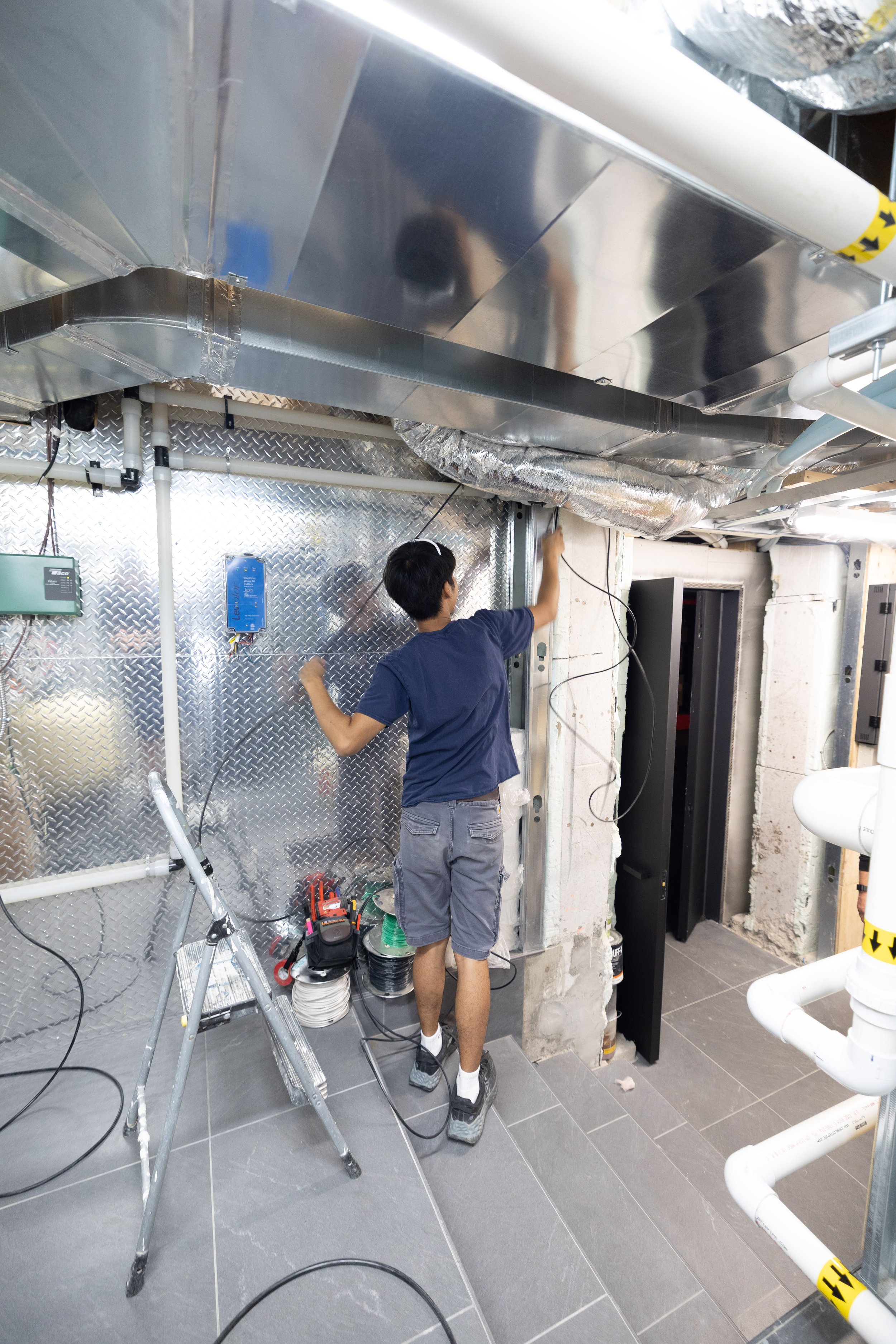
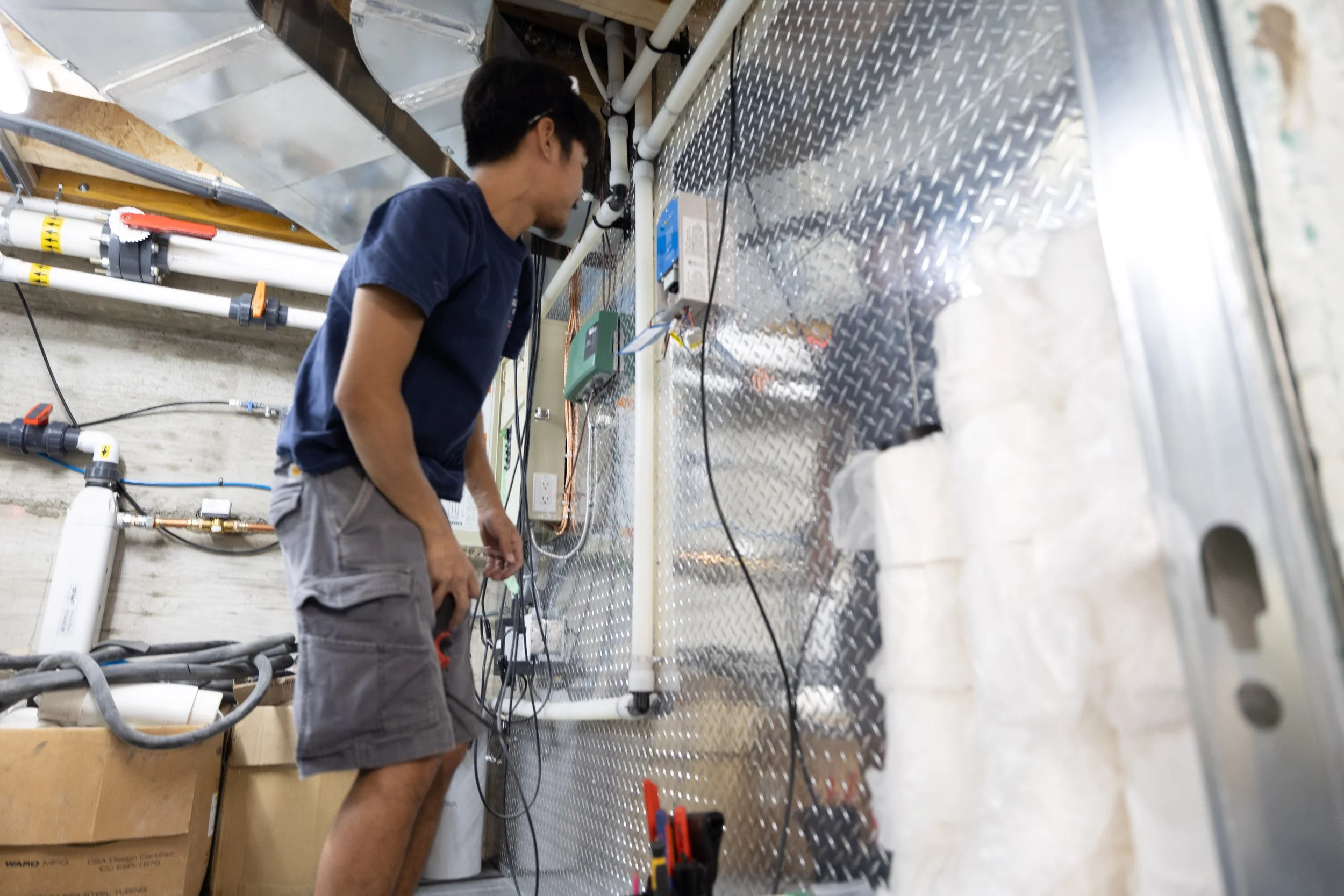
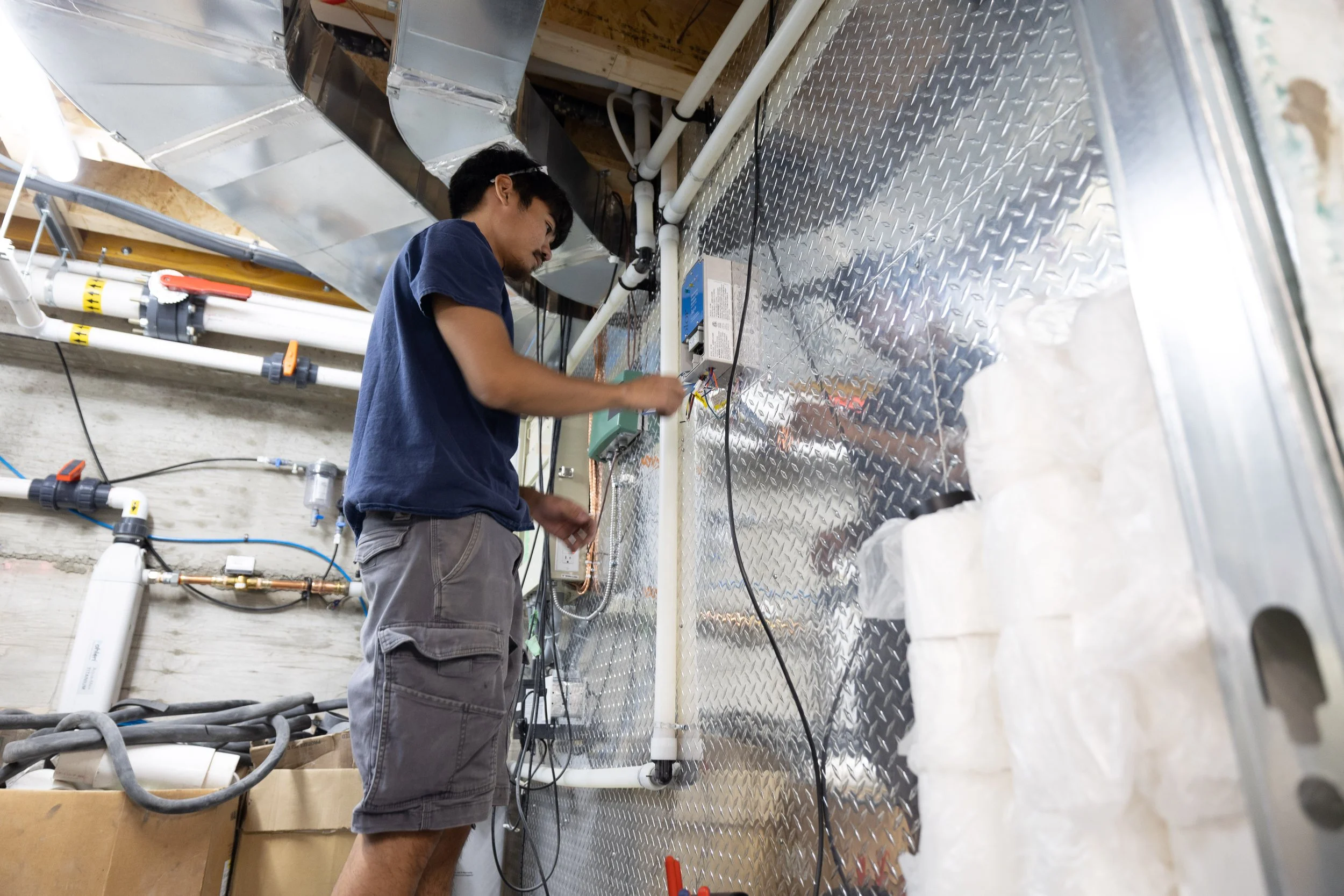
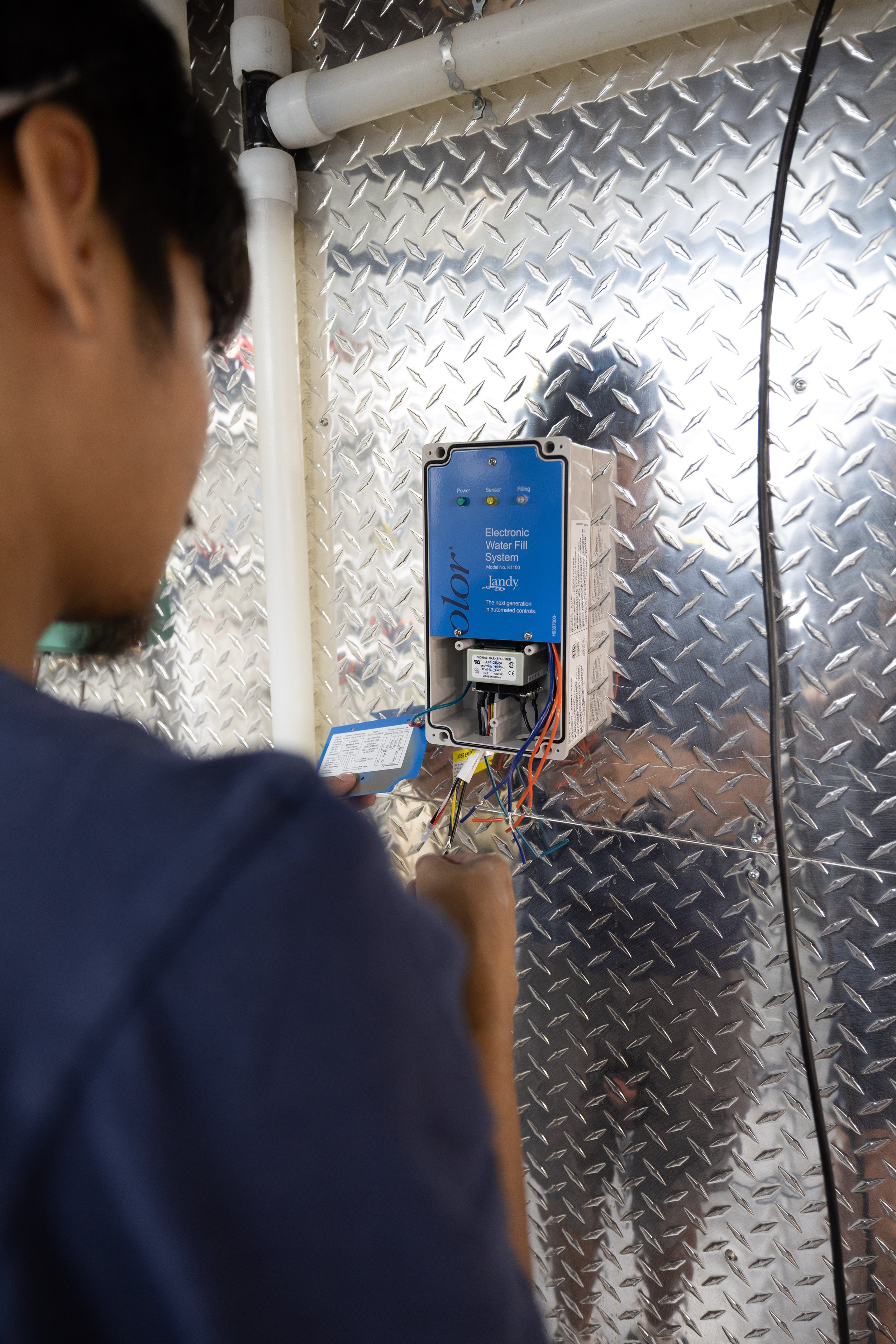
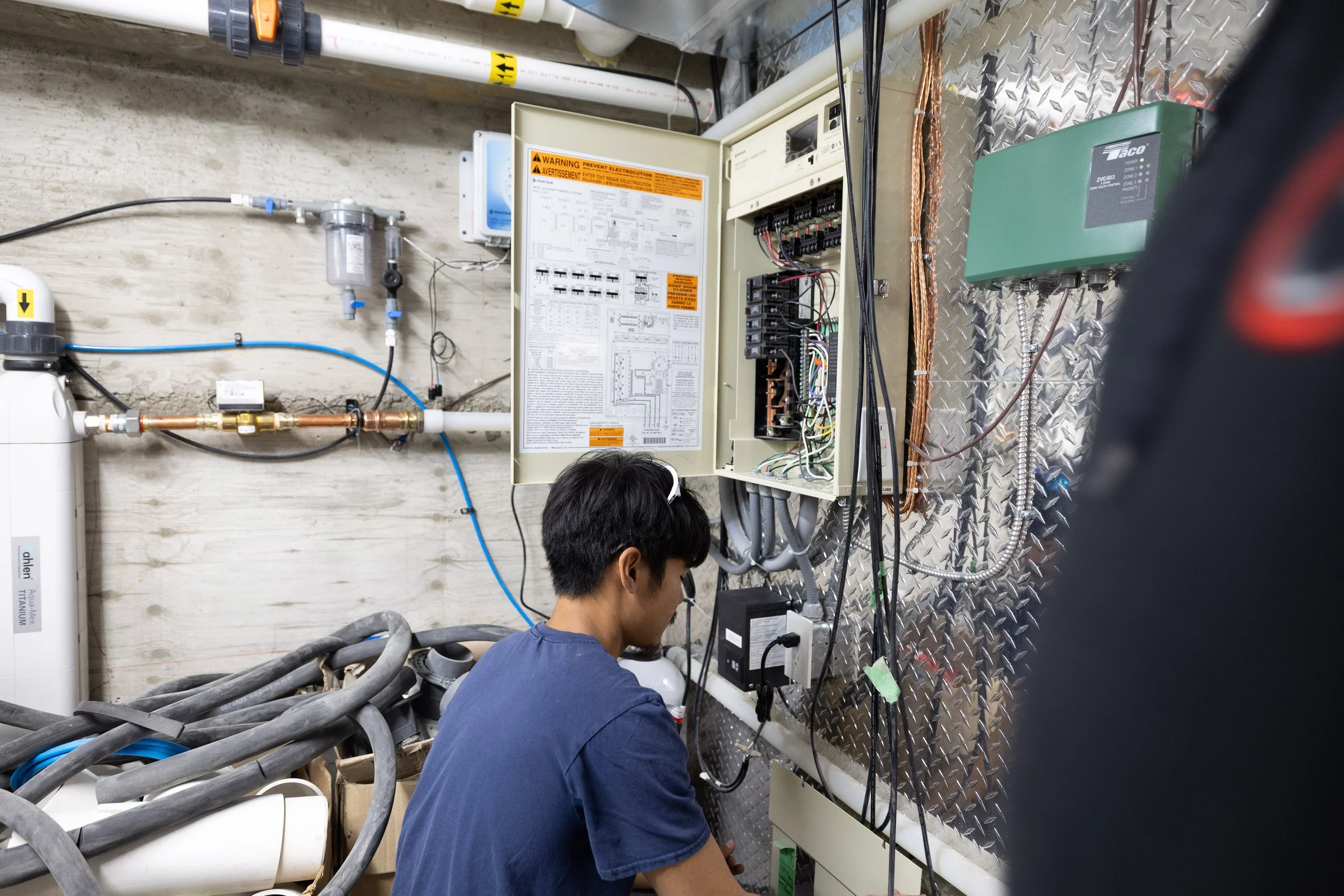
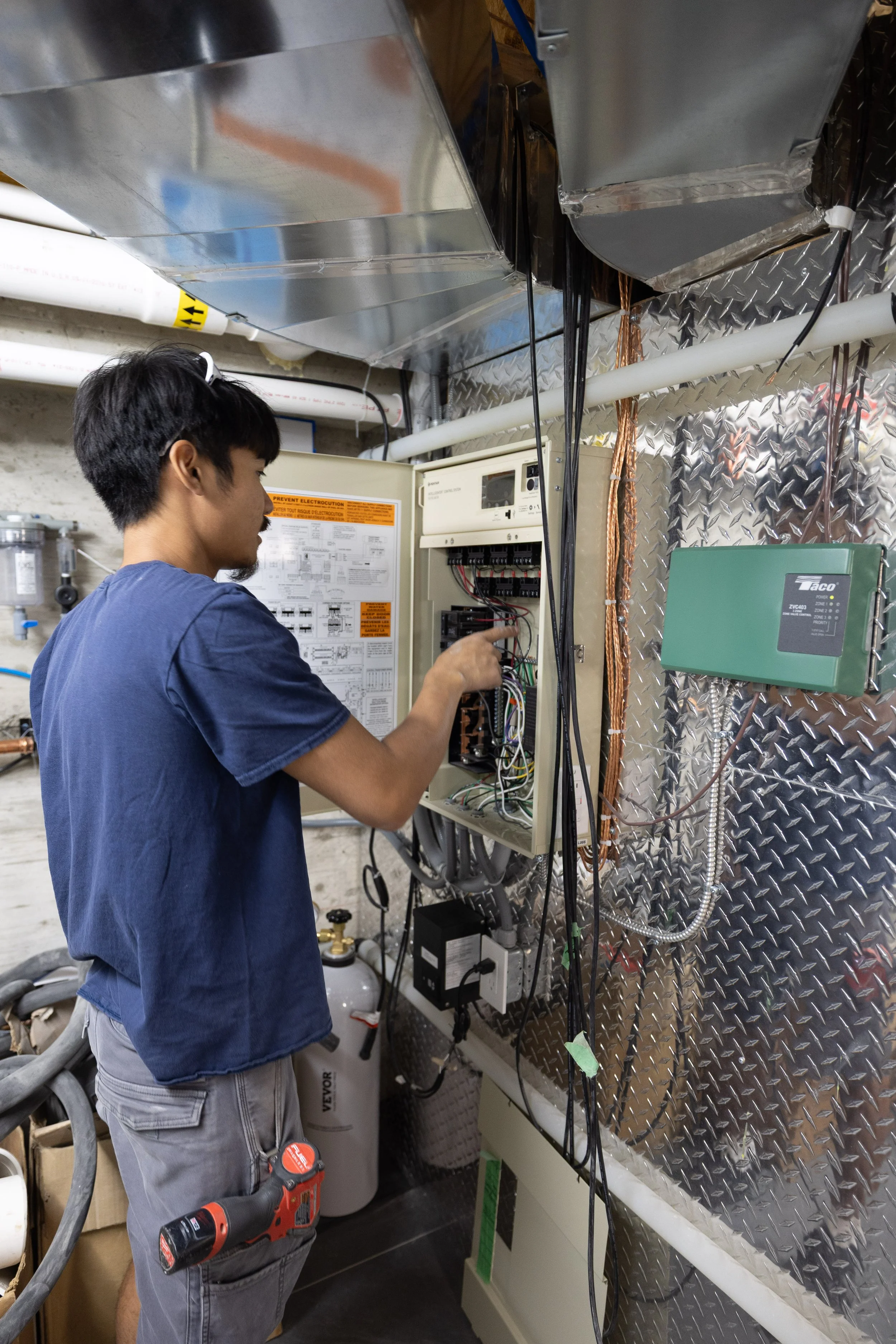
To mitigate these risks, professional electrical installations utilize advanced surface protection and industrial grade containment systems. Mounting mechanical controls onto commercial grade diamond plate backing wall panels creates a highly durable, structured workspace. The diamond plating provides a rigid, clean surface that isolates sensitive electrical enclosures from raw concrete walls, which frequently harbor structural moisture. Furthermore, every conduit run in this zone must utilize liquid tight, non metallic flexible conduit or rigid PVC to guarantee that water and humidity cannot breach the internal conductor pathways.
Beyond the conduit selections, the choice of enclosures is paramount. Standard metal junction boxes are completely replaced with heavy duty NEMA rated fiberglass or polycarbonate enclosures. These specialized boxes feature continuous polyurethane gaskets and stainless steel latches, ensuring a complete airtight seal against moisture penetration. Every entry point where a conduit meets an enclosure is secured with threaded liquid tight hubs and rubber sealing rings, maintaining the environmental integrity of the internal breakers and relays.
Voltage Segregation: Separating Power from Automation Control
A modern luxury pool relies on a dual layered electrical ecosystem: high voltage power circuits and low voltage automation controls. High voltage lines (typically 240V) are required to drive heavy duty mechanical equipment such as variable speed filtration pumps, powerful heating units, and automatic pool cover motors. Conversely, low voltage circuits (often 12V or 24V) manage digital automation panels, chemical sensors, smart thermostats, and LED lighting networks.
If these two systems are poorly staged or routed through shared pathways, high voltage electromagnetic fields can bleed into the low voltage communication lines. This phenomenon, known as electrical noise or electromagnetic interference, can cause digital control panels to glitch, trigger false sensor errors, or disrupt smart home automation links.
Professional staging solves this issue by creating physical segregation. Power lines and control cables are routed through completely independent conduit runs, and low voltage modules are mounted with clear physical clearance from heavy sub panels and disconnect switches. Maintaining a minimum physical separation of twelve inches between high voltage feeds and low voltage data lines inside the layout prevents signal degradation, ensuring that automation platforms receive accurate data from chemical sensors and water temperature probes.
Grounding, Bonding, and Stray Voltage Mitigation
The most critical safety element of any pool related electrical installation is the equipotential bonding system. While grounding redirects dangerous fault currents back to the main electrical panel to trip a circuit breaker, bonding ties all metal components around the pool and mechanical room together to create an equal electrical potential across the entire environment.
In a pool environment, even a microscopic difference in voltage between a metal pipe, a concrete floor, and the pool water can cause a noticeable, dangerous shock to anyone touching those surfaces. By connecting every pump motor, heater chassis, metal pipe, and structural steel element to a continuous, heavy gauge copper bonding grid, the risk of stray voltage is completely eliminated. Inside the mechanical room, this bonding network must be executed with flawless continuity, utilizing solid copper conductors no smaller than 6 AWG and specialized brass pressure lugs, ensuring that every piece of equipment is perfectly stabilized.
Particular attention must be paid to the bonding of pool water itself. Modern electrical codes mandate the installation of a structural water bonding device that sits in direct contact with the pool water inside the piping network. This device ensures that the body of water carries the exact same electrical potential as the surrounding concrete deck and mechanical equipment, removing any possibility of micro shocks when swimmers exit or enter the water.
Future Proofing for Smart Automation
Today's custom homes rely on integrated ecosystems where pool heating, landscape lighting, and security systems are controlled via a single smartphone app. Staging a pool mechanical room requires anticipating these integration needs. Installing expandable sub panels and routing spare conduits ensures that if a homeowner decides to add advanced features later (such as a secondary water feature pump, an outdoor kitchen feed, or automated deck jets) the core electrical infrastructure can accommodate the expansion without requiring a costly structural tear out.
Call (647) 648-4507 or visit theamps.ca to request your free estimate.