What Goes Into a Commercial Electrical Rough-In? Inside an Art School Build in the GTA
When most people think about electrical work, they picture a residential home: outlets, switches, light fixtures, maybe a panel upgrade. Commercial electrical is a different world entirely. The scale is larger, the coordination demands are greater, and the stakes are higher. On a recent institutional project in the GTA, our team at AMPS Logics Electric tackled the full electrical rough-in for a large art school build, and the experience is a perfect example of what commercial electrical work actually looks like when it is done right.
What Is an Electrical Rough-In and Why Does It Matter?
A rough-in is the phase of electrical work that happens before the walls close in. Our electricians install all the conduit, wire runs, and electrical boxes into the structural framework of the building before drywall covers everything. It is the most critical phase of the entire project because every decision made at rough-in affects the finished product. A wire ran in the wrong location, a box mounted too high or too low, conduit that was not sized for future expansion ; these are problems that are nearly impossible to fix once the drywall is up. Getting the rough-in right means the rest of the project flows smoothly, and it means the building owner has an electrical system they can rely on for the long term.
Working Within Steel Stud Framing
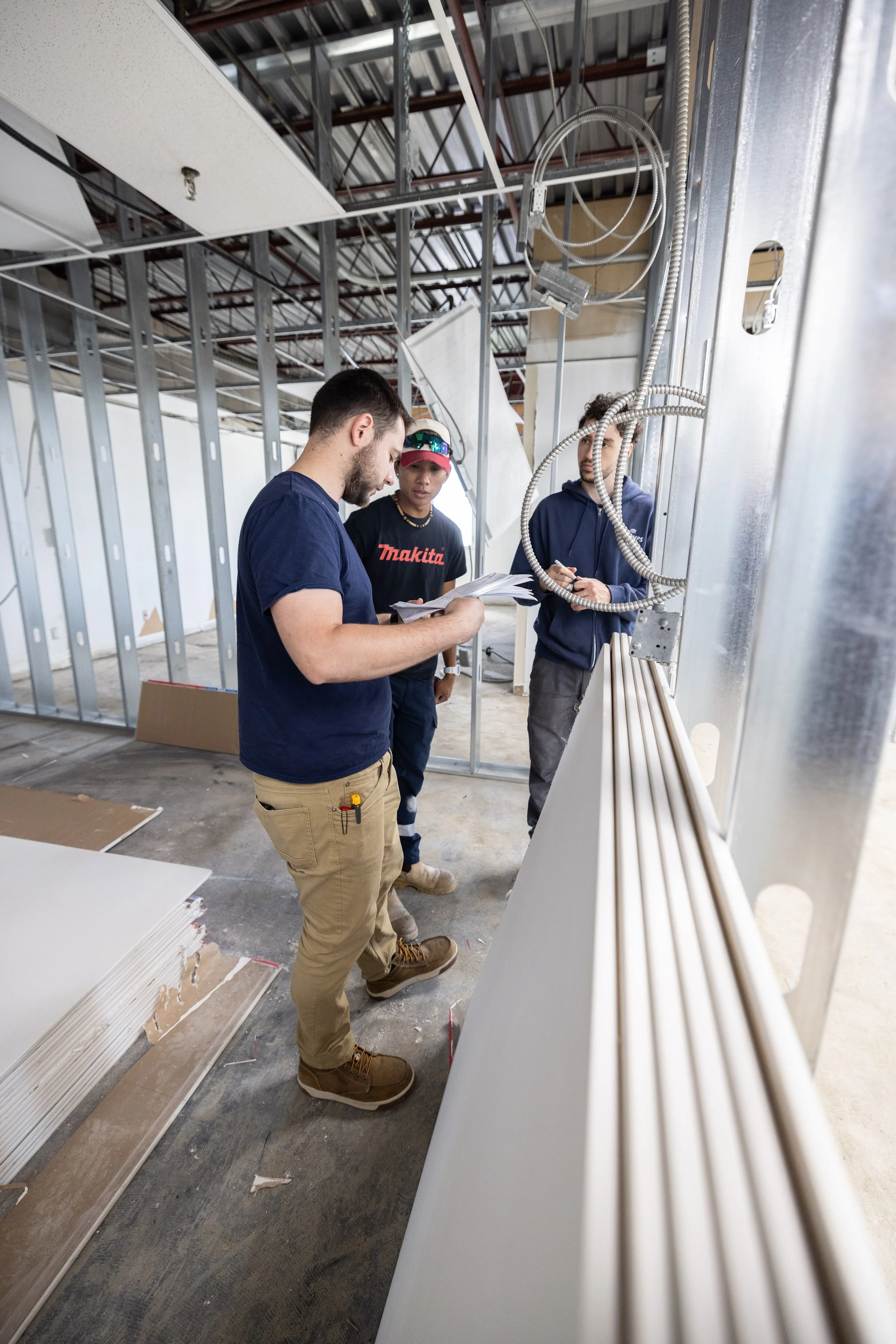
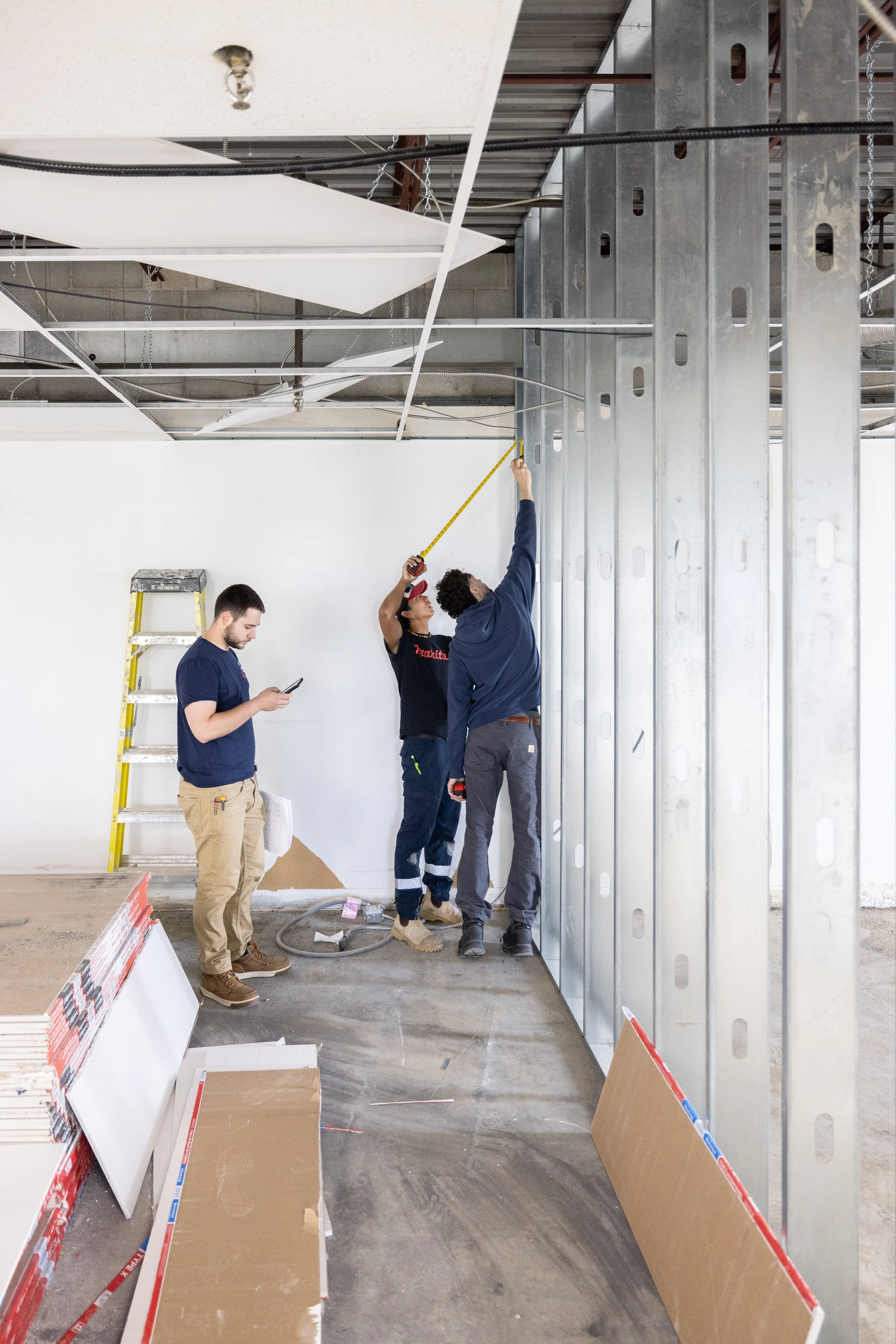
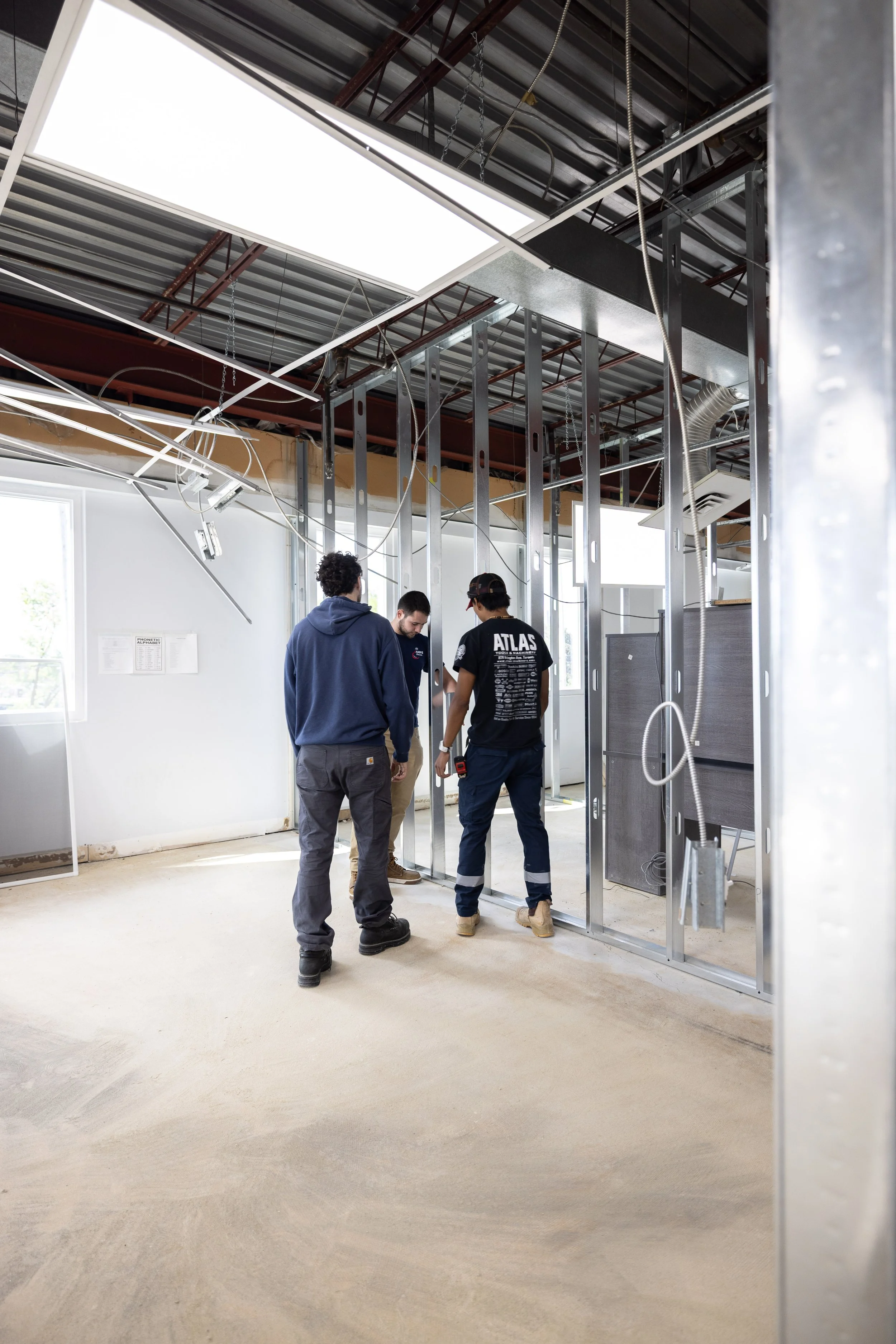
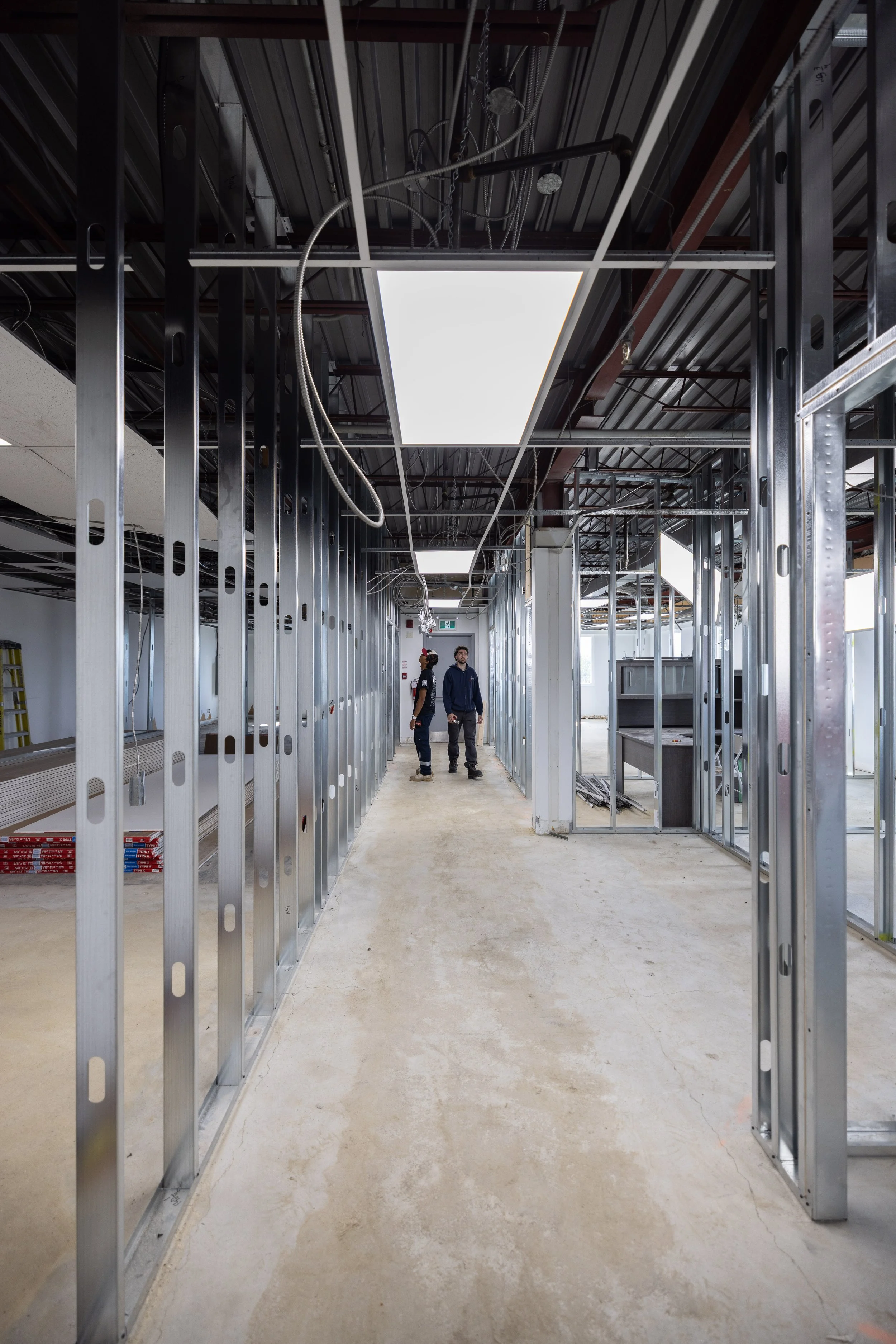
On this art school project, the entire building is framed in steel studs. Steel stud framing is standard in commercial construction and it is a very different environment from the wood frame walls found in residential builds. Steel is conductive, which means all wiring needs to be run through protective conduit or properly rated cable. Every wire pass through requires grommets or bushings to protect the wire jacket from the sharp edges of the steel studs. Our crew takes this seriously. We never cut corners on wire protection at the framing stage because a damaged wire jacket inside a finished wall is a fire hazard and a code violation.
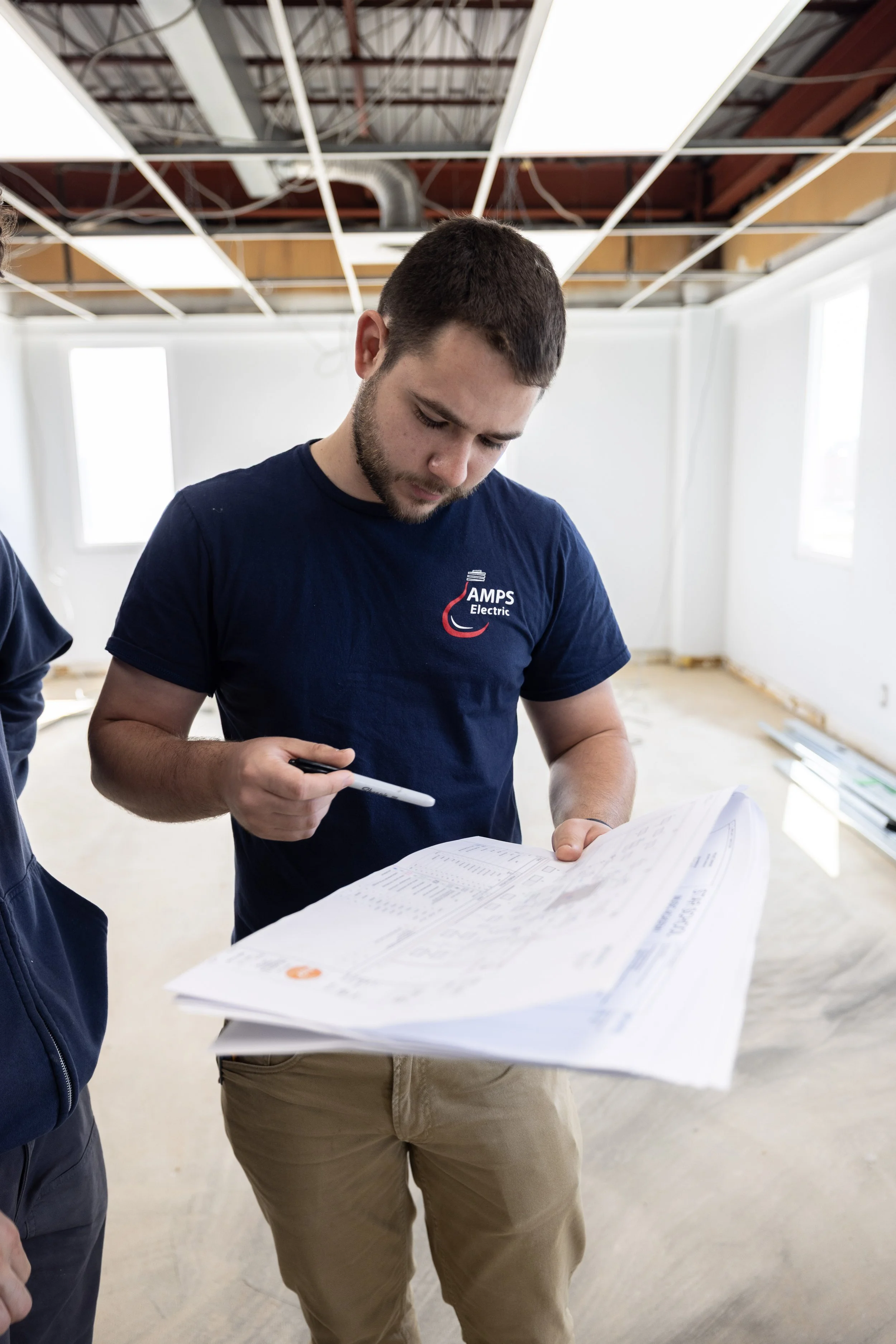
The building we worked on spans a significant footprint. Long corridors of steel stud walls run the full length of the space, and each classroom, studio, and common area requires its own dedicated circuits, lighting runs, and device rough-ins. The planning that goes into mapping all of those circuits before a single wire is pulled is substantial. Our team reviewed the electrical drawings carefully and laid out every circuit, every home run, and every device location before we started work. That upfront investment in planning is what keeps the job running efficiently and keeps change orders off the table.
Conduit Runs and Circuit Planning
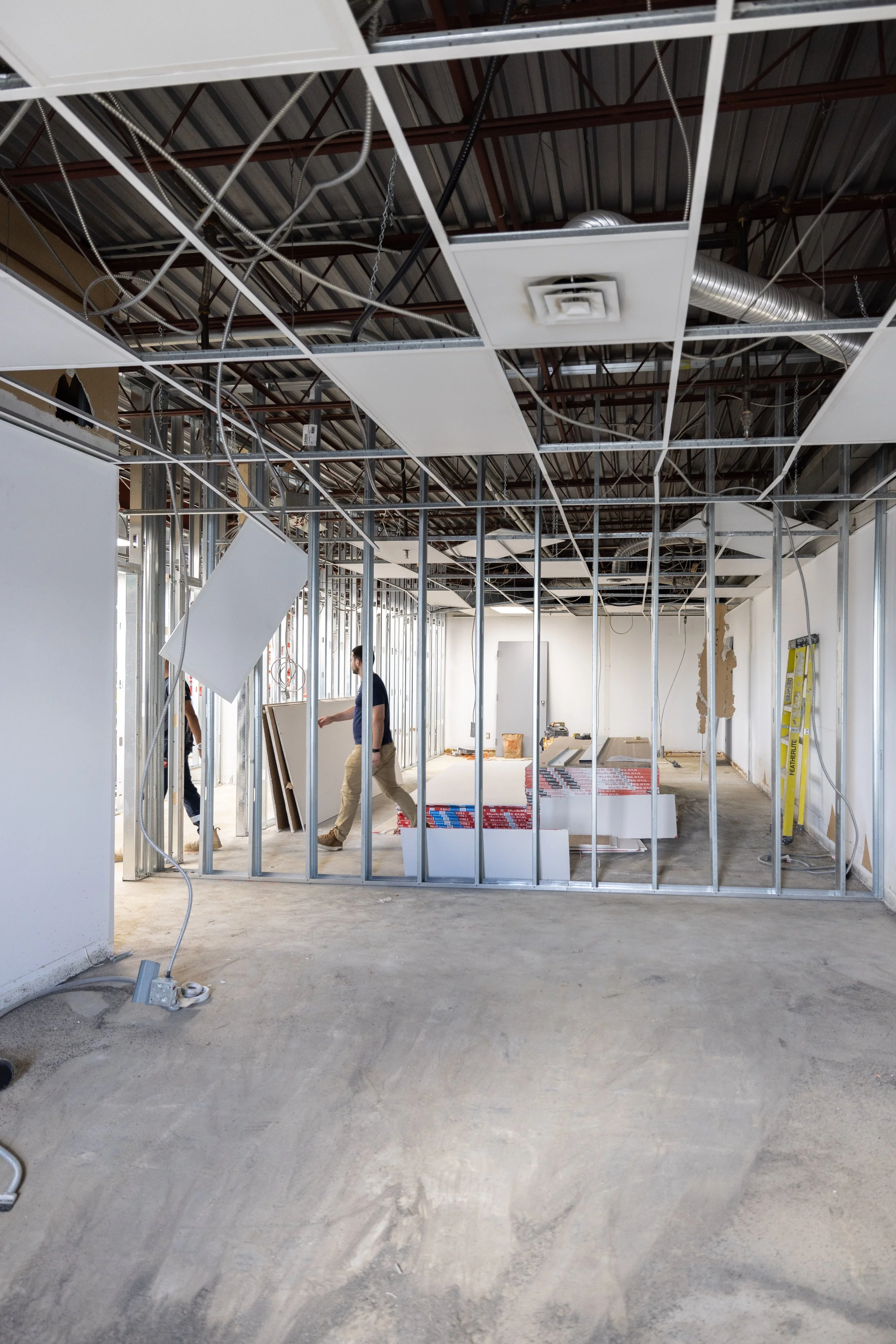
In a commercial environment, much of the wiring is run through conduit rather than simply stapled to framing as you might see in a residential attic. Conduit protects the wire, allows for future pulls and upgrades, and is required in many commercial applications under the Ontario Electrical Safety Code. On this project, we ran conduit through the ceiling cavity above the steel stud grid, coordinating with other trades to make sure our runs did not conflict with HVAC ducts, plumbing, or fire suppression lines. Coordination between trades on a large commercial site is not optional. It is the difference between a smooth build and a costly rework that nobody wants to pay for.
Circuit planning on a commercial project also involves load calculations that go well beyond anything a typical residential electrician handles. Institutional buildings have specific power demands for lighting, data, mechanical equipment, and specialty circuits. Our team works through the electrical panel schedule carefully and distributes circuits to keep loads balanced and to ensure the system has the headroom it needs to function safely and efficiently for years to come.
Electrical Box Installation
Every outlet, switch, data port, and light fixture needs a box. In commercial construction, box placement requires attention to the finished wall assembly. We account for the thickness of the drywall, any furring strips, and the type of cover plate that will be installed. Boxes in steel stud walls are secured using specialty hardware designed to hold position in the metal channel without shifting. On this project, the sheer number of boxes across multiple rooms and corridors made layout efficiency critical. Our crew worked methodically, room by room, ensuring every box was at the correct height, properly positioned, and firmly secured before moving on to the next space.
Ceiling Lighting Infrastructure
The art school features a suspended ceiling grid system, and our team installed the rough-in infrastructure for the lighting panels that will sit above that grid. LED panel lights in a commercial space require careful circuit planning because the total wattage across large open areas adds up quickly. We planned the circuits to balance the load properly and to ensure that the lighting in any given area can be zoned and controlled as required by the building design. Proper ceiling rough-in also means making sure every junction box and wire connection inside the ceiling plenum is accessible and code compliant, because what is above a ceiling tile is not invisible to an electrical inspector.
What Sets Professional Commercial Electrical Apart
The difference between a commercial rough-in done right and one done poorly comes down to planning, precision, and respect for the process. Our crew at AMPS Logics Electric approaches every commercial project with the same discipline regardless of scale. We read the drawings, coordinate with the general contractor and other trades, and execute the rough-in in a way that makes the rest of the project easier for everyone involved.
Commercial electrical is not something to hand off to a crew that has only ever done residential work. The code requirements are different, the coordination demands are different, and the consequences of doing it wrong are significantly more expensive to correct. If you are a general contractor, developer, or building owner with an upcoming commercial build in the GTA, we want to be part of your team. Reach out to AMPS Logics Electric to talk about your project and find out how we can bring the same standard of commercial electrical excellence to your next build.